Sleep Environment Setup
A room-by-room checklist for turning your bedroom into a sleep-optimized space. Covers light, temperature, sound, and the device problem. Ten minutes of setup for months of better sleep.
Okamoto-Mizuno and Mizuno (2012) in the Journal of Physiological Anthropology reviewed the effects of thermal environment on sleep. Gooley et al. (2011) in the Journal of Clinical Endocrinology & Metabolism demonstrated that room lighting suppresses melatonin by more than 50%. The National Sleep Foundation recommends 60-67°F (15-19°C) for optimal sleep temperature.
Overview
Your bedroom is either helping you sleep or preventing it. Most people have never deliberately designed their sleep environment. They have whatever lighting came with the apartment, whatever temperature felt comfortable while awake, and a phone on the nightstand. Each of these is working against your sleep biology. This practice walks you through five environmental factors and gives you specific, evidence-based adjustments.
Steps
1. Light Audit
Duration: 120 seconds
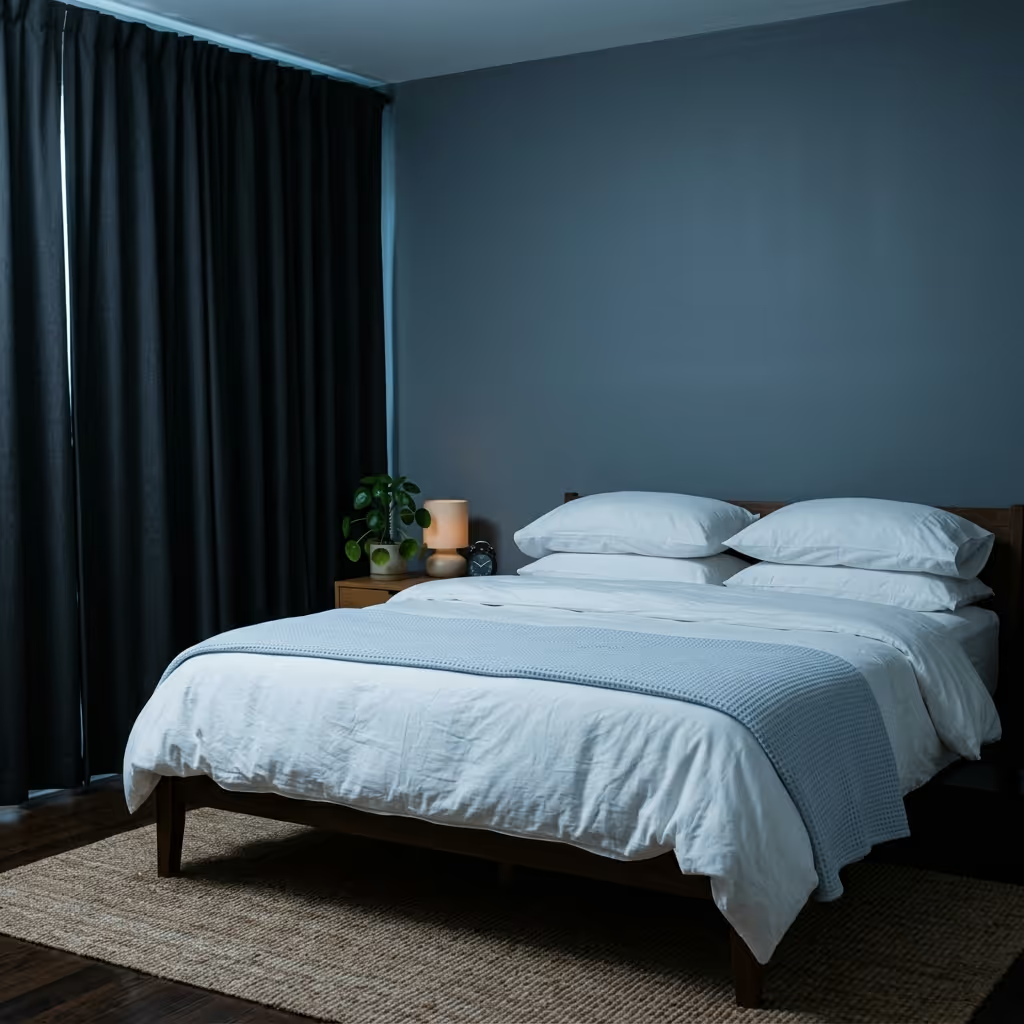
Stand in your bedroom at night with all lights off. Wait 30 seconds for your eyes to adjust. Now look around. You'll be surprised by how much light is present — charging indicators, standby LEDs, alarm clock displays, streetlight bleeding through curtains, hallway light under the door. Each light source suppresses melatonin production. Cover every LED with electrical tape. If light comes through your windows, consider blackout curtains or a fitted sleep mask. Your room should be dark enough that you can't see your hand in front of your face.
2. Temperature Check
Duration: 60 seconds
Check your thermostat or room temperature. Sleep research consistently shows 60-67°F (15-19°C) is optimal for most adults. Your body needs to drop its core temperature by about 2°F to initiate sleep. A warm room fights this process. If you can't control your thermostat, crack a window, use a fan, or switch to lighter bedding. Your feet are temperature regulators — if your feet are cold, wear socks. If your body is hot, stick one foot out from under the covers. Your body knows what it needs.
3. Sound Assessment
Duration: 60 seconds
Sit quietly in your bedroom for 60 seconds and listen. Traffic. Neighbors. Pipes. HVAC. Refrigerator hum. Sudden noises are worse than constant noise — your brain can filter steady background sound but startles at changes. If you have irregular noise, add consistent white noise: a fan, a white noise machine, or an app. The goal isn't silence. It's consistency. Your brain stops monitoring predictable sound and lets you sleep deeper.
4. Device Removal
Duration: 120 seconds
This is the step most people resist. Move your phone charger out of arm's reach — ideally to another room. If you use it as an alarm, place it across the room face down. The issue isn't just blue light. It's the psychological availability. When your phone is within reach, part of your brain stays alert for notifications, stays ready to check, stays "on." Physical distance creates mental distance. Charge your phone in the kitchen for one week and observe what happens to your sleep onset time.
5. Scent and Air Quality
Duration: 60 seconds
Open a window for 10 minutes before bed if outdoor air quality allows. Stale, CO2-rich air impairs sleep quality. If you use a scent, stick to lavender — it's one of the few scents with actual clinical evidence for sleep improvement (Lillehei & Halcon, 2014). A single drop on your pillow or a small diffuser is sufficient. Skip anything with synthetic fragrance, which can irritate airways and cause the opposite effect.
6. The Two-Minute Bedroom Reset
Duration: 90 seconds
Make this a nightly micro-habit. Every night before bed: close curtains fully, set thermostat to 65°F, turn on white noise, place phone face-down across the room, and take one look around the room for anything visually stimulating (piles of laundry, open laptop, work papers). A cluttered visual field keeps your brain in processing mode. You don't need to clean — just cover or close what you can. This 2-minute ritual becomes a Pavlovian cue for your brain: "Setup is done. Time to sleep."
Why practice this
Benefits
- Reduces sleep onset latency (time to fall asleep) by an average of 14 minutes
- Room temperature optimization alone improves deep sleep by 20% (Okamoto-Mizuno & Mizuno, 2012)
- Blue light elimination in the evening increases melatonin production by up to 58%
- Consistent environment cues reduce middle-of-night awakenings
- Creates a Pavlovian sleep association — your brain learns "this room means sleep"
- Costs nothing but attention to implement

Research
Okamoto-Mizuno and Mizuno (2012) in the Journal of Physiological Anthropology reviewed the effects of thermal environment on sleep. Gooley et al. (2011) in the Journal of Clinical Endocrinology & Metabolism demonstrated that room lighting suppresses melatonin by more than 50%. The National Sleep Foundation recommends 60-67°F (15-19°C) for optimal sleep temperature.
Science
Your circadian rhythm is primarily regulated by light exposure. Melanopsin receptors in your retinas detect blue-spectrum light and signal the suprachiasmatic nucleus to suppress melatonin production. Gooley et al. (2011) showed that typical room lighting before bed suppresses melatonin onset by 90 minutes and reduces overall melatonin production by more than 50%. Temperature drops trigger melatonin release and facilitate the transition from wakefulness to sleep. These are not preferences — they're biological mechanisms that respond predictably to environmental manipulation.
Preparation
What You Need
- Access to your bedroom
- 10 minutes to assess and adjust
- Optional: blackout curtains, white noise machine, fan
- Optional: blue-light blocking glasses or phone settings
Pro tips
Tips for Success
- 1Make your bedroom a single-purpose room. If you work, eat, or watch TV in bed, your brain stops associating it with sleep.
- 2If you can't make your room completely dark, a $10 sleep mask works just as well
- 3White noise doesn't need to be expensive. A cheap box fan running on low is clinically effective.
- 4Keep a notepad on your nightstand instead of your phone. If a thought keeps you awake, write it down and let it go.

Ready to Start?
Take 10 minutes today. Follow the steps above and begin building your practice.
Explore More Practices