Climate Anxiety Test
Climate change thoughts disrupt my focus and concentration.
The unpredictable nature of climate change fills me with fear.
I occasionally wonder why I struggle to cope with climate issues.
I find it impossible to manage or stop my climate-related worries.
Climate change leaves me feeling completely exhausted.
Climate concerns keep me awake at night.
I can easily ignore climate change mentally.
Climate anxiety affects my performance at work or in school.
I've experienced direct impacts from climate change.
I worry about minimizing my own climate footprint.
Climate anxiety interferes with enjoying time with loved ones.
I frequently feel guilty about my role in climate change.
Climate change often leaves me feeling nervous or anxious.
I don't worry about my future on Earth.
Climate news brings me down emotionally.
The magnitude of climate problems overwhelms me.
Thinking about climate change gives me physical symptoms like headaches.
I get frustrated by the lack of action on climate issues.
I'm scared of what climate change might bring.
Climate change doesn't seem very significant to me.
20 questions remaining
What to Know
- The American Psychological Association defines climate anxiety or eco-anxiety as "a chronic fear of environmental doom." There are different words that describe different parts of the experience, like ecological grief or solastalgia.
- People who are worried about climate change don't have a clinical diagnosis for climate anxiety.
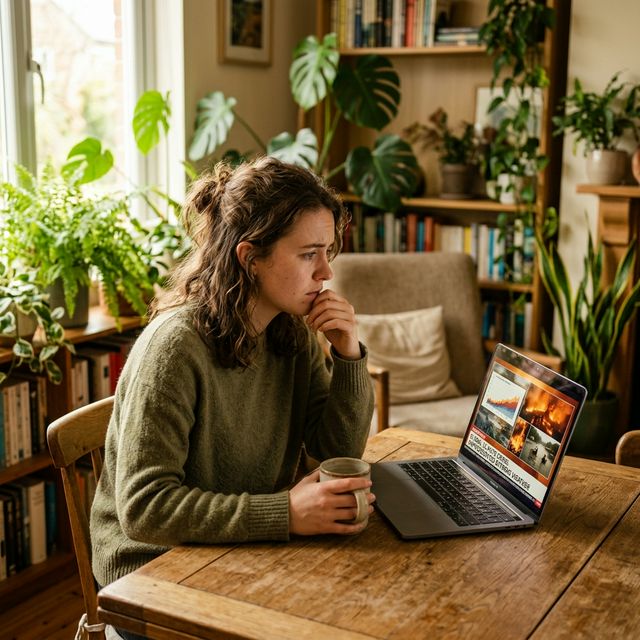
- People who have climate anxiety may feel scared, helpless, guilty, hopeless, or angry. They may also have trouble concentrating, sleep problems, or stomachaches and headaches.
- Climate change can affect mental health in many ways, especially for people who have been through natural disasters like hurricanes or wildfires. Studies show that PTSD, anxiety, and drug use tend to go up after that.
- A 2022 survey of American adults found that about 33% are worried about climate change and about 60% are either worried or alarmed. The number of people who were worried doubled in the last five years.
- Young people are more likely than anyone else to feel climate anxiety. In a 2024 survey, 38% of young people in the U.S. said that their feelings about climate change made their daily lives worse.
Do Something Different
Find ways to deal with climate anxiety. Some skills that can help are getting support from others, spending time in nature, being active, and being able to bounce back from setbacks, like being mindful and being able to change your mind.
Limit your intake: It's fine to limit how much news or talk about climate change you take in to a level you can handle.
Get a therapist: A mental health professional can help you deal with strong or upsetting feelings about climate change and find ways to cope.