Online Behavior Test
Online information I've encountered has led me to believe things that weren't accurate.
My online habits have caused me to fall behind on important work or school assignments.
Comparing my life to what I see others posting makes me feel inadequate.
I've found myself unable to pull away from social media once I start browsing.
I regularly experience harassment or mean comments in digital spaces.
Political disagreements on social platforms have caused me to end real-world friendships.
Viewing images of others online negatively impacts how I see my own body.
I experience anxiety when I can't access my digital devices.
Time spent on social platforms often leaves me feeling more isolated than before I logged on.
I've been dishonest with family members about my actual screen time.
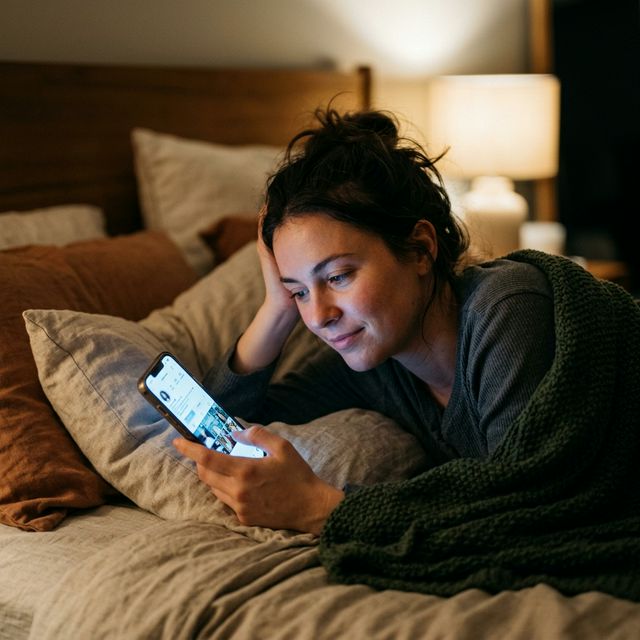
I frequently stay up past my bedtime browsing online content.
When facing difficulties, I often turn to social media as an escape.
People close to me have expressed concern about my digital device usage.
When interrupted during online browsing, I frequently request additional time before disconnecting.
My device constantly bombards me with alerts and updates.
I've attempted to reduce my phone checking habits without success.
Calculating my weekly screen time total makes me uncomfortable.
My academic or professional results would likely improve with less digital distraction.
I sometimes feel compelled to catch up on all my social media updates.
Even when I set digital boundaries, I regularly bypass my own restrictions.
20 questions remaining
What You Should Know
Americans spend an average of three to seven hours a day looking at screens, whether they are perusing the web or scrolling through social media. Teenagers tend to be on the higher end of that range, which means that too much screen time is becoming a bigger problem for their health and growth.
What to Do
- Reconnect with real-life hobbies: Studies have shown that spending less time on screens and more time doing things in the real world can help you sleep better, feel less anxious, and generally feel better.
- Find out what hurts you. Most of us need to be online for a good part of the workday. Try to figure out which things bother you the most, like checking your email when you wake up at night or looking at notifications while you're talking to someone.
- Don't use your phone too much. You can either leave your phone charging outside of the bedroom or lock it up in "cell phone jail." Either way, limiting your use of it will give you more time to do other things instead of scrolling through your phone or going down Wikipedia wormholes until the early hours of the morning.