Menopause Test
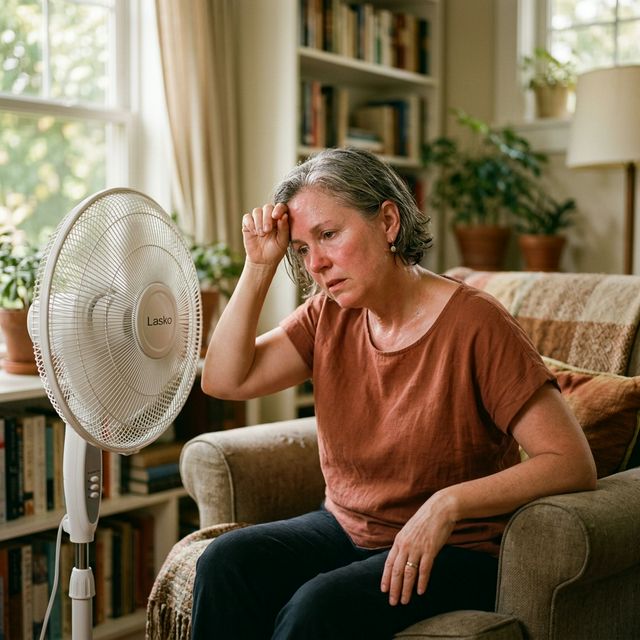
Do you get sudden feelings of heat in your body?
Are your emotions changing unexpectedly throughout the day?
Have your breasts become more sensitive or sore?
Does your skin feel less supple or more dehydrated?
Has your interest in sexual activity decreased?
Do you notice dryness in your vaginal area?
Have you missed your period recently?
Do you struggle to get restful sleep at night?
Do you wake up drenched in sweat during the night?
Do you feel aches or discomfort in your muscles?
Do you find yourself getting easily annoyed or frustrated?
Has your skin developed more lines or discoloration?
Are your periods more intense or heavier than they used to be?
Do you feel pain or stiffness in your joints?
Do you get sudden cold sensations or shivers?
Is it hard for you to focus or stay on task?
Have you noticed an increase in your body weight?
Is your hair becoming less dense or falling out more?
Has your body's ability to process calories changed?
Do you often feel tired or lacking in vitality?
20 questions remaining
What You Should Know
- There are many reasons why someone might go through menopause early. For example, if their ovaries were removed during surgery, they might have autoimmune disorders like thyroid problems or adrenal deficiencies, cancer treatments, or infections like mumps or malaria.
- Stress, alcohol, caffeine, a hot environment, or certain foods may make your symptoms worse.
- The time before menopause, when a woman's hormones slowly drop, is called perimenopause. Menopause usually lasts four years, but it can last much longer or shorter. Every woman is different.
- Hormone replacement therapy (HRT) replaces oestrogen and progesterone and helps with some symptoms like hot flashes, vaginal dryness, and trouble sleeping.
- Menopause can't be stopped or reversed, but treatment is focused on managing and improving symptoms. Because of risks and side effects like stroke, blood clots, and some cancers, HRT is often suggested in low doses.
What to Do
Make sure you get enough sleep, eat well, work out regularly, and stay away from smoking and drinking.
Talk to your doctor about your symptoms, as some of them may be signs of other health issues.
There are many places you can go for help, such as the American College of Obstetricians and Gynaecologists, the National Institute on Ageing, and the National Library of Medicine.