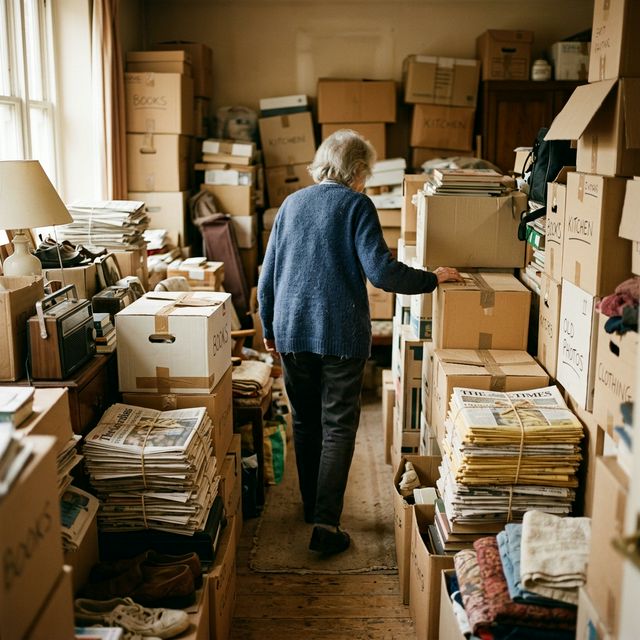
Hoarding Test
Getting rid of things I don't actually need causes me emotional pain.
I struggle to stop myself from collecting more items.
Friends or family often comment that my home is packed with stuff that serves no purpose.
My hoarding habits have started to interfere with my relationships and social activities.
I frequently bring home objects that I have no real use for.
Because of all the clutter, I can't properly use certain areas of my house.
Letting go of everyday items that most people would toss out is really challenging for me.
My daily life and routines are negatively impacted by my tendency to hoard.
Navigating through parts of my home has become difficult due to piled-up belongings.
I feel compelled to hold onto things just in case they might be useful later.
I own several copies of the same item that just sit unused.
To enter a room, I sometimes have to shift piles of possessions out of the way.
I don't invite guests over because I'm embarrassed about the clutter in my living space.
Controlling my impulse to acquire new things is a constant battle.
The thought of throwing away possessions I don't need fills me with anxiety, so I avoid it.
15 questions remaining
What You Should Know
People who hoard keep all kinds of things, like junk mail, letters, bills, receipts, clothes, accessories, plastic bags, cardboard boxes, household goods, and even pets, to name a few.
- About 2 to 6 percent of people in the US have hoarding disorder, and it affects men and women of all cultures.
- People may start to hoard when they are very young, even as young as 6 years old. This tendency frequently escalates with advancing age and may deteriorate with each passing decade.
- Hoarding disorder is a mental illness that is listed in the Diagnostic and Statistical Manual of Mental Disorders. It is linked to other mental illnesses like OCD, ADHD, anxiety, and depression.
- Around 50% of people who have this tendency have a family member who hoards. Nonetheless, definitive evidence regarding a genetic influence or environmental contribution remains lacking.
Make It Better
Throw away one thing. Randy Frost, a researcher on hoarding, says you should try throwing away one thing to see how it feels. Continuing with more items without feeling rushed.
A donation box: You can get better at organizing and making decisions by setting up a donation box for things that can be quickly settled.
Clutter buddy: Get a friend to help you clear your clutter by talking or comparing notes.