Loving-Kindness Meditation
A heart-centered practice that extends feelings of warmth and goodwill outward in widening circles — from yourself, to people you love, to strangers, to people you find difficult. Proven to increase positive emotions by 25%.
Fredrickson et al. (2008) in the Journal of Personality and Social Psychology showed 7 weeks of loving-kindness meditation increased positive emotions, social connections, and life satisfaction. Kang et al. (2014) in the Journal of Experimental Social Psychology demonstrated reduced implicit bias after just 6 weeks. Hutcherson et al. (2008) found increased feelings of social connection after a single 7-minute session.
Overview
Loving-kindness meditation isn't about generating warm feelings on command. It's about systematically practicing the intention of goodwill — toward yourself, toward people you love, toward strangers, and eventually toward people who make your life harder. The feelings follow the intention over time, not the other way around. You don't need to feel anything specific for this practice to work. The neural rewiring happens through repetition of the intention itself.
Steps
1. Settle and Connect
Duration: 60 seconds
Sit comfortably. Close your eyes. Place one hand on your chest if that helps you feel grounded. Take five slow breaths. On each exhale, let your body get heavier. Feel the physical sensation of sitting — contact with the chair, weight through your sit bones, clothing against your skin. You're arriving in your body before you engage your heart.
2. Direct Kindness to Yourself
Duration: 120 seconds
Silently repeat: "May I be safe. May I be healthy. May I be happy. May I live with ease." Repeat the cycle two or three times, slowly. You're not affirming that these things are true right now. You're expressing the wish that they become true. If the words feel hollow, that's normal. If they feel difficult, that's information. Many people find this the hardest step — it's easier to wish well for others than for yourself. Stay with it. The discomfort is the practice working.
3. Someone You Love
Duration: 120 seconds
Bring to mind someone you love easily and without complication. A partner, a parent, a child, a close friend, a pet. Picture them clearly. Say silently: "May you be safe. May you be healthy. May you be happy. May you live with ease." This part usually feels natural. Notice the warmth that arises — that's the feeling you're learning to generate and extend. Let it fill your chest.
4. A Neutral Person
Duration: 90 seconds
Think of someone you see regularly but don't know well. The barista. A neighbor. Someone in the elevator. You have no positive or negative feelings toward them. Picture them briefly. Now extend the same phrases: "May you be safe. May you be healthy. May you be happy. May you live with ease." This step stretches your empathy beyond your inner circle. This person has a full life, worries, dreams, and a bad day sometimes — just like you.
5. A Difficult Person
Duration: 90 seconds
This is where the real work happens. Think of someone who frustrates you, hurt you, or makes your life harder. Start mild — not your deepest wound, just someone who's annoying or disappointing. Hold their image. Acknowledge that they, too, suffer. They, too, want happiness. Then, with whatever willingness you can find: "May you be safe. May you be healthy. May you be happy. May you live with ease." You're not forgiving them. You're not excusing what they did. You're practicing the radical act of not wishing them harm.
6. All Beings
Duration: 60 seconds
Let the boundaries dissolve. Extend your awareness outward — your building, your city, your country, the world. Every person, every creature, every conscious being navigating life with varying degrees of success. "May all beings be safe. May all beings be healthy. May all beings be happy. May all beings live with ease." Feel the phrases move outward in concentric circles from your chest. You are one small source of goodwill in a world that needs it.
7. Close and Carry
Duration: 60 seconds
Take a deep breath. Notice what's in your chest right now — warmth, openness, tenderness, nothing, or something you can't name. Whatever it is, it's the result of 10 minutes of practicing kindness. Open your eyes slowly. This feeling is portable. You can silently offer "may you be happy" to anyone you encounter today. The cashier, the difficult coworker, the stranger on the street. Each time you do, you reinforce the neural pathways you just built.
Why practice this
Benefits
- Increases positive emotions by 25% after 7 weeks of practice (Fredrickson et al., 2008)
- Reduces self-criticism and internalized shame
- Improves social connection and decreases feelings of loneliness
- Reduces implicit bias toward out-groups (Kang et al., 2014)
- Decreases social anxiety and fear of rejection
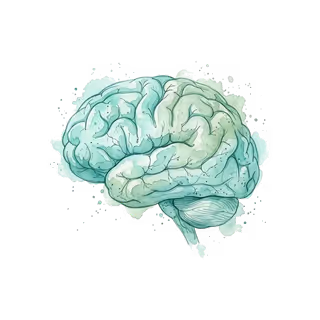
- Activates brain regions associated with empathy and emotional processing

Research
Fredrickson et al. (2008) in the Journal of Personality and Social Psychology showed 7 weeks of loving-kindness meditation increased positive emotions, social connections, and life satisfaction. Kang et al. (2014) in the Journal of Experimental Social Psychology demonstrated reduced implicit bias after just 6 weeks. Hutcherson et al. (2008) found increased feelings of social connection after a single 7-minute session.
Science
Loving-kindness meditation increases activity in brain regions associated with empathy, emotional processing, and reward — specifically the insula and temporal parietal junction. Fredrickson's broaden-and-build theory suggests that positive emotions generated during the practice create an upward spiral, increasing social resources, resilience, and life satisfaction over time. Functional MRI studies show that experienced practitioners activate empathy-related brain networks more strongly and more quickly in response to others' suffering, suggesting genuine neurological changes in how the brain processes social information.
Preparation
What You Need
- A comfortable seated position
- 10 minutes of quiet time
- Your eyes closed
- Optional: one hand on your heart (physical contact increases the effect)
Pro tips
Tips for Success
- 1Start with someone easy to love — a pet works perfectly if human relationships feel complicated
- 2The phrases don't need to be the traditional ones. "May you be safe" can become "I hope things get easier for you." Use words that feel natural.
- 3For the difficult person step, start with someone mildly annoying, not the person who hurt you most. Build the skill gradually.
- 4If directing kindness to yourself feels uncomfortable, that's common and important. That resistance is the reason you need this practice.
Ready to Start?
Take 10 minutes today. Follow the steps above and begin building your practice.
Explore More Practices