Breath Awareness Meditation
The most fundamental mindfulness practice. Five minutes of watching your breath come and go. Every time your mind wanders and you bring it back, you've done one repetition. That's the whole exercise.
Zeidan et al. (2010) in Consciousness and Cognition demonstrated significant improvements in attention and working memory after only 4 days of 20-minute breath-focused meditation. Tang et al. (2015) in Nature Reviews Neuroscience reviewed the neuroimaging evidence showing structural brain changes from attention-to-breath practices.
Overview
Breath Awareness is where every meditation tradition begins, and it's the only practice many experienced meditators ever need. The instructions are simple: pay attention to your breath. When your mind wanders, notice that it wandered, and come back. Each return is one repetition. You're not training your mind to be empty. You're training your mind to notice where it is and redirect it. That skill transfers to everything else in your life.
Steps
1. Sit Down and Close Your Eyes
Duration: 30 seconds
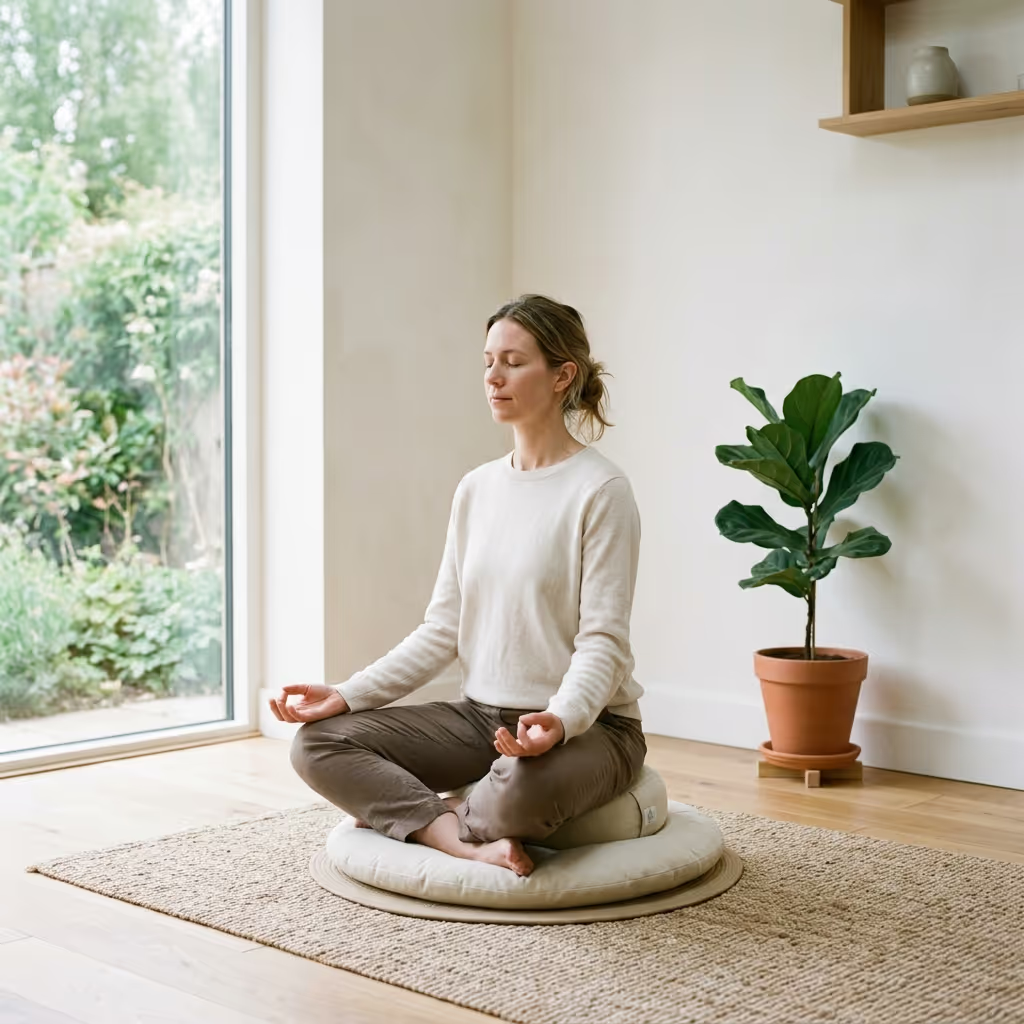
Sit on a chair with your feet flat on the floor, or cross-legged on a cushion. Your back should be upright but not rigid — imagine a string pulling gently from the crown of your head. Drop your shoulders away from your ears. Rest your hands on your knees or in your lap. Close your eyes. If closing your eyes feels uncomfortable, lower your gaze to a spot on the floor about three feet ahead. Take one big breath in through your nose and let it go through your mouth. Settle.
2. Find Where You Feel Your Breath
Duration: 30 seconds
Without changing anything about how you breathe, notice where the sensation of breathing is strongest for you. Three common anchor points: the nostrils (cool air in, warm air out), the chest (expansion and contraction), or the belly (rising and falling). Pick one. There's no correct answer. Some people feel it at the nostrils immediately. Others need to place a hand on their belly to feel anything. Choose your anchor and stick with it for this session.
3. Count Your Breaths
Duration: 150 seconds
Start counting. Inhale — one. Exhale — two. Inhale — three. Continue to ten, then start over at one. The counting isn't the point; it's a scaffold to keep your attention on the breath. Your mind will wander. You'll suddenly realize you're planning dinner, replaying a conversation, or worrying about tomorrow. The moment you realize you've wandered, you've just practiced mindfulness. Don't get frustrated. Don't judge your wandering. Just return to one and start counting again.
4. Drop the Counting
Duration: 90 seconds
After several rounds of counting, let the numbers go. Just breathe. Follow each inhale from beginning to end. Follow each exhale from beginning to end. Notice the tiny pause between them. Without the scaffold of counting, your mind will wander more. That's fine. You're working at a higher difficulty now. Each time you notice the drift and come back, the anterior cingulate cortex — the brain region responsible for detecting errors and redirecting attention — gets a tiny bit stronger.
5. Close the Practice
Duration: 30 seconds
Take two slow, intentional deep breaths. Wiggle your fingers and toes. Roll your shoulders once. Before you open your eyes, notice how you feel compared to when you sat down. You might feel calmer, or you might not. Both are fine. The neurological benefit happens whether you feel it or not. Open your eyes. You just completed the single most well-researched mental health intervention available. Five minutes.
Why practice this
Benefits
- Reduces anxiety within a single 5-minute session
- Improves sustained attention and working memory after just 4 days of practice (Zeidan et al., 2010)
- Activates the parasympathetic nervous system, lowering heart rate and blood pressure
- Strengthens the prefrontal cortex's ability to override emotional reactivity
- Reduces cortisol production during stressful situations
- Serves as the foundation for every other meditation practice

Research
Zeidan et al. (2010) in Consciousness and Cognition demonstrated significant improvements in attention and working memory after only 4 days of 20-minute breath-focused meditation. Tang et al. (2015) in Nature Reviews Neuroscience reviewed the neuroimaging evidence showing structural brain changes from attention-to-breath practices.
Science
Breath-focused attention activates the prefrontal cortex while simultaneously calming the amygdala, creating a neurological state where clear thinking coexists with reduced emotional reactivity. Zeidan et al. (2010) documented measurable improvements in sustained attention and working memory after just four 20-minute sessions. Long-term practitioners show increased gray matter density in brain regions associated with self-awareness, compassion, and introspection (Lazar et al., 2005, NeuroReport).
Preparation
What You Need
- A chair or floor cushion
- 5 minutes without interruption
- A timer (so you don't watch the clock)
- That's it. No app, no music, no special equipment.
Pro tips
Tips for Success
- 1You will lose count. You will forget what number you're on. That's not failure — that's the moment the practice actually works. Noticing the wandering IS the exercise.
- 2Breathe through your nose if you can. Nose breathing naturally slows the breath rate and engages the diaphragm.
- 3Five minutes daily is more effective than thirty minutes once a week. Frequency beats duration.
- 4If sitting still feels impossible, try this after physical activity when your body has already discharged some restless energy.

Ready to Start?
Take 5 minutes today. Follow the steps above and begin building your practice.
Explore More Practices