Alternate Nostril Breathing
An ancient pranayama technique that alternates airflow between left and right nostrils. Balances the two hemispheres of your brain, lowers blood pressure, and creates a calm focus that feels distinctly different from other breathing methods.
Sharma et al. (2013) in the Indian Journal of Physiology and Pharmacology demonstrated significant blood pressure and heart rate reductions. Telles et al. (2013) in the Journal of Alternative and Complementary Medicine showed that alternate nostril breathing improved cardiovascular function markers. Ghiya and Lee (2012) published findings in Medical Science Monitor confirming its superiority over simple relaxation breathing for anxiety reduction.
Try interactive breathing tool →
Overview
You have a nasal cycle you've probably never noticed. Every 90-120 minutes, your dominant breathing nostril switches. Right nostril breathing correlates with sympathetic (alert, active) nervous system activity. Left nostril correlates with parasympathetic (calm, reflective) activity. Alternate nostril breathing manually cycles between these states, creating a balanced autonomic state that feels like neither anxious alertness nor sleepy calm — but a clear, settled readiness. It's the only breathing technique that specifically targets hemispheric brain balance.
Steps
1. Set Up Your Hand Position
Duration: 30 seconds
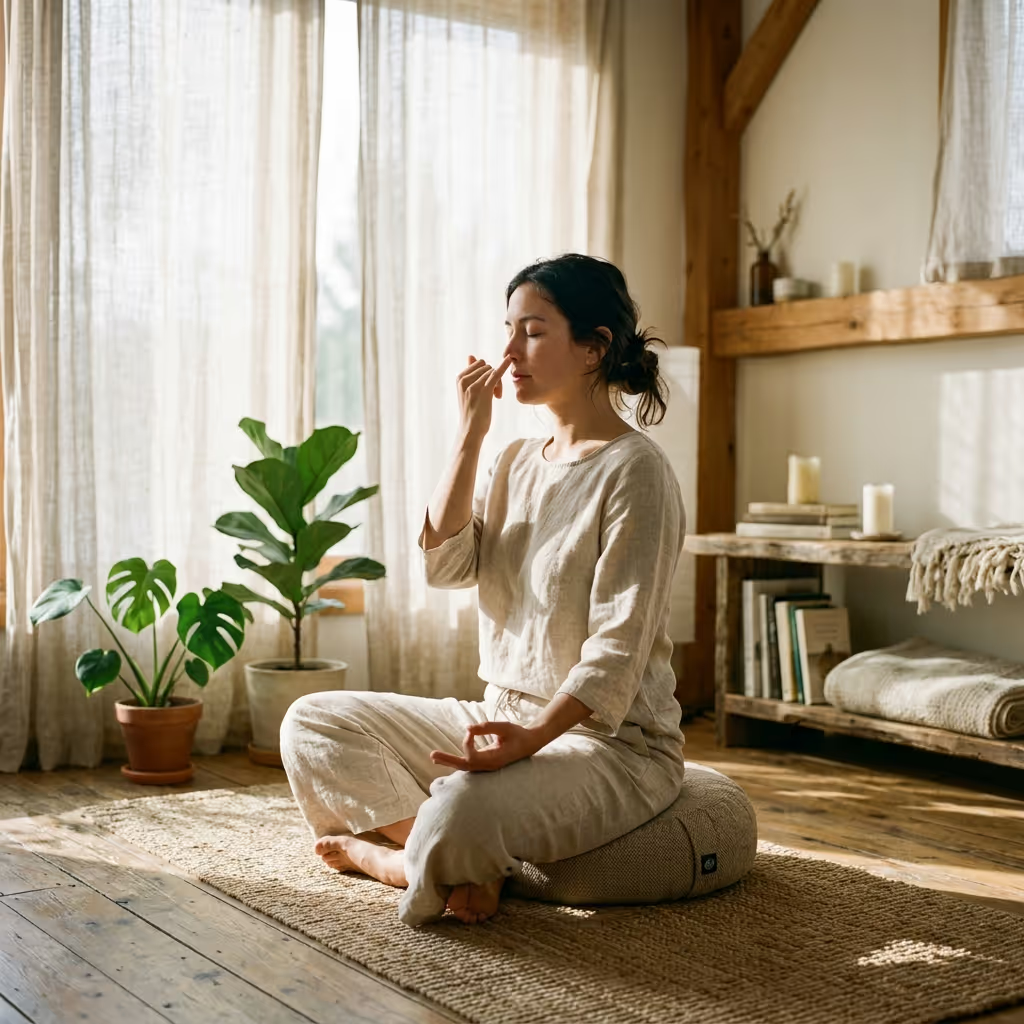
Use your right hand. Fold your index and middle fingers down toward your palm, or rest them lightly on your forehead between your eyebrows. Your thumb will control your right nostril. Your ring finger (and optionally pinky) will control your left nostril. Practice pressing each nostril closed gently — enough to redirect air, not enough to squish your nose. Rest your left hand on your left knee. Sit tall.
2. Close Right, Inhale Left
Duration: 60 seconds
Close your right nostril with your thumb. Inhale slowly through your left nostril for 4 seconds. Fill your belly, then your chest. The left nostril is associated with the parasympathetic nervous system and the right brain hemisphere — the calm, creative, receptive side. A slow, complete inhale through this side begins the calming process immediately. Feel the cool air entering through just one nostril. It's a different sensation than breathing through both.
3. Close Both, Hold Briefly
Duration: 15 seconds
At the top of your inhale, close both nostrils — thumb on right, ring finger on left. Hold for 2 seconds. This brief pause allows gas exchange to optimize and creates a natural transition point. Keep your face and shoulders relaxed. This hold should feel like a pause, not a strain. If even 2 seconds feels uncomfortable, skip the hold entirely for your first week.
4. Open Right, Exhale Right
Duration: 60 seconds
Release your thumb and exhale slowly through your right nostril for 4 seconds. Keep the left nostril closed with your ring finger. The exhale is controlled and steady — not forced, not rushed. The right nostril activates the sympathetic nervous system and left brain hemisphere — the analytical, focused side. But because you're exhaling (which is inherently calming), you get focus without agitation.
5. Inhale Right, Hold, Exhale Left
Duration: 120 seconds
Without switching hands, inhale through the right nostril for 4 seconds. Close both nostrils and hold for 2 seconds. Open the left nostril (release ring finger) and exhale through the left for 4 seconds. That completes one full cycle: left in, right out, right in, left out. The alternation is what creates the balancing effect. Each side of your autonomic nervous system gets activated and then deactivated in turn.
6. Continue for 10 Cycles
Duration: 300 seconds
Repeat the full cycle 10 times. The rhythm becomes easier after 3-4 cycles — your coordination improves and you stop thinking about which finger goes where. By cycle 5-6, most people notice a distinctive shift in their mental state. Not drowsy, not wired. Clear. Present. Balanced. A state that's hard to describe until you feel it. After your final cycle, release your hand and breathe naturally through both nostrils. Sit quietly for 30 seconds and notice the quality of your mind.
Why practice this
Benefits
- Lowers blood pressure and heart rate within 5 minutes (Sharma et al., 2013)
- Balances autonomic nervous system function between sympathetic and parasympathetic branches
- Reduces anxiety scores by 15-20% in clinical studies
- Improves cardiovascular function and respiratory efficiency
- Enhances cognitive performance and working memory
- Creates a unique state of calm alertness rather than drowsiness
- Reduces perceived stress more effectively than simple deep breathing
Research
Sharma et al. (2013) in the Indian Journal of Physiology and Pharmacology demonstrated significant blood pressure and heart rate reductions. Telles et al. (2013) in the Journal of Alternative and Complementary Medicine showed that alternate nostril breathing improved cardiovascular function markers. Ghiya and Lee (2012) published findings in Medical Science Monitor confirming its superiority over simple relaxation breathing for anxiety reduction.
Science
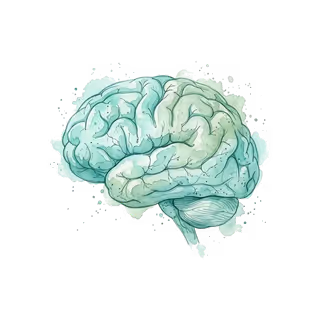
Each nostril connects to the opposite brain hemisphere through the olfactory nerve pathways. Right nostril breathing increases left hemisphere activity (logical, verbal processing) and sympathetic nervous system tone. Left nostril breathing increases right hemisphere activity (spatial, creative processing) and parasympathetic tone. Alternating between them creates bilateral autonomic balance that neither side alone achieves. Sharma et al. (2013) measured this directly — blood pressure and heart rate dropped significantly within 5 minutes, while cognitive test scores improved. The mechanism appears to involve balanced stimulation of the hypothalamus, which regulates autonomic function, hormonal release, and emotional processing.
Preparation
What You Need
- A comfortable seated position with good posture
- Your right hand (for nostril control)
- Clear nasal passages (blow your nose first if needed)
- 10 minutes
Pro tips
Tips for Success
- 1Use your right hand: thumb controls the right nostril, ring finger controls the left. Index and middle fingers rest lightly on your forehead between your eyebrows.
- 2Apply gentle pressure — you're redirecting airflow, not creating a watertight seal
- 3If one nostril is chronically congested, the practice still works. Just breathe as fully as you can through the blocked side.
- 4Keep your left hand relaxed on your knee, palm up or down
- 5The hand position (Vishnu Mudra in yoga tradition) feels awkward at first. It becomes natural within a few sessions.
Ready to Start?
Take 10 minutes today. Follow the steps above and begin building your practice.
Explore More Practices